ניפוי עבודות עם NEAT
גרסאות חבילות
הקוד בדף זה פותח תוך שימוש בדרישות הבאות. אנחנו ממליצים להשתמש בגרסאות אלה או בגרסאות חדשות יותר.
qiskit[all]~=2.5.2
qiskit-ibm-runtime~=0.47.0
qiskit-aer~=0.17
אפשר להשתמש במחלקה Neat כדי לנתח את השפעת הרעש על עומס עבודת Estimator. לצורך אימות תחביר, השתמשו במצב בדיקה מקומי.
שימוש במחלקת Neat
לפני שמגישים עומס עבודה רב-משאבים להרצה על חומרה, אפשר להשתמש בכלי NEAT (Noisy Estimator Analyzer Tool) של IBM Quantum Compute כדי לוודא שעומס עבודת Estimator מוגדר נכון, סביר להניח שיחזיר תוצאות מדויקות, משתמש באפשרויות המתאימות ביותר לבעיה שצוינה, ועוד.
Neat מבצעת Cliffordization על ה-Circuits של הקלט לצורך סימולציה יעילה, תוך שמירה על המבנה והעומק שלהם. Circuits מסוג Clifford סובלים מרמות רעש דומות ומשמשים כתחליף טוב לחקר ה-Circuit המקורי שמעניין אותנו.
ראשית, ייבאו את החבילות הרלוונטיות ובצעו אימות לשירות IBM Quantum Compute.
הכנת הסביבה
# Added by doQumentation — installs the packages this notebook needs if they are missing
import importlib.util

_needed = {"numpy": "numpy", "qiskit": "qiskit", "qiskit_aer": "qiskit-aer", "qiskit_ibm_runtime": "qiskit-ibm-runtime"}
_missing = [pip for module, pip in _needed.items()
            if importlib.util.find_spec(module) is None]
# One at a time, so a package that fails to install does not block the others
for _pip in _missing:
    %pip install -q {_pip}
if not _missing:
    print("\u2713 All required packages are installed")
import numpy as np
import random

from qiskit.circuit import QuantumCircuit
from qiskit.transpiler import generate_preset_pass_manager
from qiskit.quantum_info import SparsePauliOp

from qiskit_ibm_runtime import QiskitRuntimeService, NoiseLearnerV3

# Legacy server-side primitive before qiskit-ibm-runtime 0.50.0
# from qiskit_ibm_runtime import Estimator

# Client-side primitive introduced in qiskit-ibm-runtime 0.50.0
from qiskit_ibm_runtime.executor_estimator import Estimator
from qiskit_ibm_runtime.debug_tools import Neat

from qiskit_aer.noise import NoiseModel, depolarizing_error
# Choose the least busy backend
service = QiskitRuntimeService()
backend = service.least_busy(operational=True, simulator=False)

# Generate a preset pass manager
# This will be used to convert the abstract circuit to an equivalent
# Instruction Set Architecture (ISA) circuit.

pm = generate_preset_pass_manager(backend=backend, optimization_level=0)

# Set the random seed
random.seed(10)
אתחול Circuit יעד
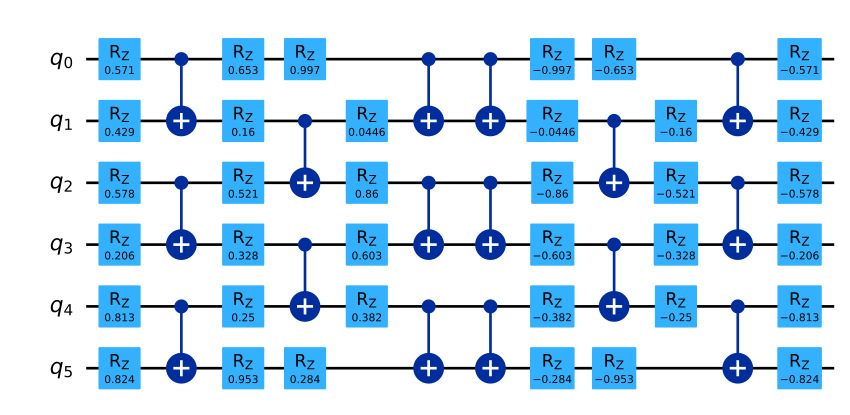
נשקול Circuit בן שישה qubit-ים עם המאפיינים הבאים:
-
מתחלף בין סיבובי
RZאקראיים ושכבות של שעריCNOT. -
בעל מבנה מראה, כלומר מפעיל אופרטור אוניטרי
Uולאחריו את ההופכי שלו.
def generate_circuit(n_qubits, n_layers):
    r"""
    A function to generate a pseudo-random a circuit with ``n_qubits`` qubits
    and ``2*n_layers`` entangling layers of the type used in this notebook.
    """
    # An array of random angles
    angles = [
        [random.random() for q in range(n_qubits)] for s in range(n_layers)
    ]

    qc = QuantumCircuit(n_qubits)
    qubits = list(range(n_qubits))

    # do random circuit
    for layer in range(n_layers):
        # rotations
        for q_idx, qubit in enumerate(qubits):
            qc.rz(angles[layer][q_idx], qubit)

        # cx gates
        control_qubits = (
            qubits[::2] if layer % 2 == 0 else qubits[1 : n_qubits - 1 : 2]
        )
        for qubit in control_qubits:
            qc.cx(qubit, qubit + 1)

    # undo random circuit
    for layer in range(n_layers)[::-1]:
        # cx gates
        control_qubits = (
            qubits[::2] if layer % 2 == 0 else qubits[1 : n_qubits - 1 : 2]
        )
        for qubit in control_qubits:
            qc.cx(qubit, qubit + 1)

        # rotations
        for q_idx, qubit in enumerate(qubits):
            qc.rz(-angles[layer][q_idx], qubit)

    return qc

# Generate a random circuit
qc = generate_circuit(6, 3)
# Convert the abstract circuit to an equivalent ISA circuit.
isa_qc = pm.run(qc)

qc.draw("mpl", idle_wires=0)
בחרו אופרטורי פאולי Z בודדים כמשתנים נצפים (observables) והשתמשו בהם לאתחול ה-PUB-ים (primitive unified blocs).
# Initialize the observables
obs = ["ZIIIII", "IZIIII", "IIZIII", "IIIZII", "IIIIZI", "IIIIIZ"]
print(f"Observables: {obs}")

# Map the observables to the backend's layout
isa_obs = [SparsePauliOp(o).apply_layout(isa_qc.layout) for o in obs]

# Initialize the PUBs, which consist of six-qubit circuits
# with `n_layers` 1, ..., 6
all_n_layers = [1, 2, 3, 4, 5, 6]

pubs = [(pm.run(generate_circuit(6, n)), isa_obs) for n in all_n_layers]
Observables: ['ZIIIII', 'IZIIII', 'IIZIII', 'IIIZII', 'IIIIZI', 'IIIIIZ']
Cliffordization של ה-Circuit-ים
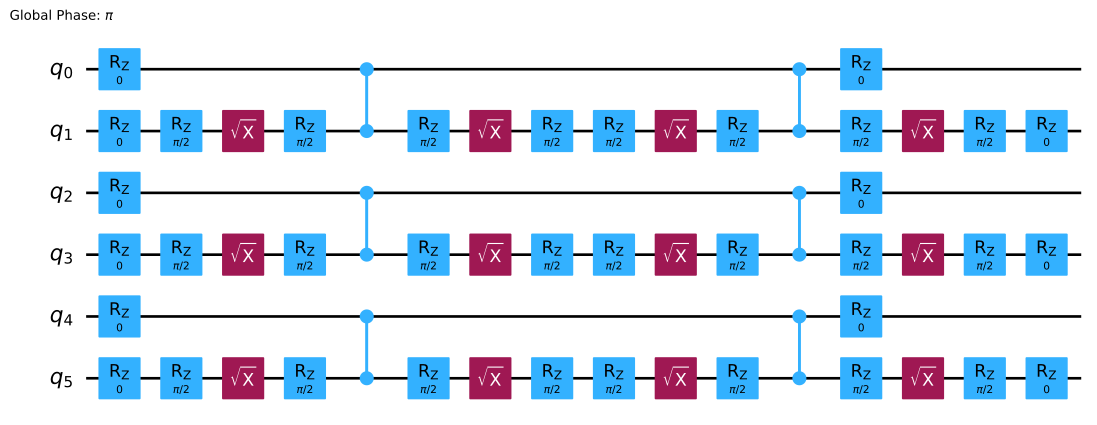
ה-Circuit-ים של ה-PUB שהוגדרו קודם אינם מסוג Clifford, מה שמקשה על סימולציה קלאסית שלהם. עם זאת, אפשר להשתמש בשיטת Neat to_clifford כדי למפות אותם ל-Circuit-ים מסוג Clifford לסימולציה יעילה יותר. שיטת to_clifford היא עטיפה סביב מעבר ה-Transpiler ConvertISAToClifford, שניתן להשתמש בו גם באופן עצמאי. בפרט, הוא מחליף שערים חד-Qubit שאינם מסוג Clifford ב-Circuit המקורי בשערים חד-Qubit מסוג Clifford, אך אינו משנה את שערי שני ה-Qubit-ים, מספר ה-Qubit-ים, או עומק ה-Circuit.
ראו סימולציה יעילה של Circuit-ים מסוג stabilizer עם פרימיטיבים של Qiskit Aer למידע נוסף על סימולציית Circuit מסוג Clifford.
ראשית, אתחלו את Neat.
# You could specify a custom `NoiseModel` here. If `None`, `Neat`
# pulls the noise model from the given backend
noise_model = None

# Initialize `Neat`
analyzer = Neat(backend, noise_model)
לאחר מכן, בצעו Cliffordization על ה-PUB-ים.
clifford_pubs = analyzer.to_clifford(pubs)

clifford_pubs[0].circuit.draw("mpl", idle_wires=0)
יישום 1: ניתוח השפעת הרעש על תוצאות ה-Circuit
דוגמה זו מראה איך להשתמש ב-Neat כדי לחקור את ההשפעה של מודלי רעש שונים על PUBים כפונקציה של עומק ה-Circuit, על ידי הרצת סימולציות בתנאים אידיאליים (ideal_sim) ורועשים (noisy_sim). זה יכול להיות שימושי כדי לקבוע ציפיות לגבי איכות התוצאות הניסויות לפני הרצת עבודה על QPU. למידע נוסף על מודלי רעש, ראו סימולציה מדויקת ורועשת עם Qiskit Aer primitives.
תוצאות הסימולציה תומכות בפעולות מתמטיות, ולכן אפשר להשוות ביניהן (או עם תוצאות ניסויות) כדי לחשב מדדי איכות.
QPU יכול להיות מושפע מסוגים שונים של רעש. מודל הרעש של Qiskit Aer שמשמש כאן מדמה רק חלק מהם, ולכן סביר שיהיה פחות חמור מהרעש על QPU אמיתי.
לפרטים על אילו שגיאות נכללות בעת אתחול מודל רעש מ-QPU, ראו את תיעוד ה-API של Aer NoiseModel.
מתחילים בביצוע סימולציות קלאסיות אידיאליות ורועשות.
# Perform a noiseless simulation
ideal_results = analyzer.ideal_sim(clifford_pubs)
print(f"Ideal results:\n {ideal_results}\n")

# Perform a noisy simulation with the backend's noise model
noisy_results = analyzer.noisy_sim(clifford_pubs)
print(f"Noisy results:\n {noisy_results}\n")
Ideal results:
 NeatResult([NeatPubResult(vals=array([1., 1., 1., 1., 1., 1.])), NeatPubResult(vals=array([1., 1., 1., 1., 1., 1.])), NeatPubResult(vals=array([1., 1., 1., 1., 1., 1.])), NeatPubResult(vals=array([1., 1., 1., 1., 1., 1.])), NeatPubResult(vals=array([1., 1., 1., 1., 1., 1.])), NeatPubResult(vals=array([1., 1., 1., 1., 1., 1.]))])
Noisy results:
 NeatResult([NeatPubResult(vals=array([0.99609375, 0.99414062, 0.98632812, 0.9921875 , 0.97460938,
       0.97851562])), NeatPubResult(vals=array([0.984375  , 0.98828125, 0.98046875, 0.98632812, 0.96679688,
       0.98828125])), NeatPubResult(vals=array([0.9609375 , 0.9765625 , 0.953125  , 0.95898438, 0.95703125,
       0.96679688])), NeatPubResult(vals=array([0.96875   , 0.97070312, 0.93164062, 0.94335938, 0.93164062,
       0.97460938])), NeatPubResult(vals=array([0.9140625 , 0.9296875 , 0.91796875, 0.92382812, 0.90429688,
       0.91992188])), NeatPubResult(vals=array([0.89648438, 0.9140625 , 0.921875  , 0.94921875, 0.92773438,
       0.95117188]))])
לאחר מכן, מפעילים פעולות מתמטיות כדי לחשב את ההפרש המוחלט. שאר המדריך משתמש בהפרש המוחלט כמדד איכות להשוואת תוצאות אידיאליות עם תוצאות רועשות או ניסויות, אך ניתן להגדיר מדדי איכות דומים.
ההפרש המוחלט מראה שהשפעת הרעש גדלה עם גודל ה-Circuitים.
# Figure of merit: Absolute difference
def rdiff(res1, res2):
    r"""The absolute difference between `res1` and res2`.

    --> The closer to `0`, the better.
    """
    d = abs(res1 - res2)
    return np.round(d.vals * 100, 2)

for idx, (ideal_res, noisy_res) in enumerate(
    zip(ideal_results, noisy_results)
):
    vals = rdiff(ideal_res, noisy_res)

    # Print the mean absolute difference for the observables
    mean_vals = np.round(np.mean(vals), 2)
    print(
        f"Mean absolute difference between ideal and noisy results "
        f"for circuits with {all_n_layers[idx]} layers:\n  {mean_vals}%\n"
    )
Mean absolute difference between ideal and noisy results for circuits with 1 layers:
  1.3%

Mean absolute difference between ideal and noisy results for circuits with 2 layers:
  1.76%

Mean absolute difference between ideal and noisy results for circuits with 3 layers:
  3.78%

Mean absolute difference between ideal and noisy results for circuits with 4 layers:
  4.66%

Mean absolute difference between ideal and noisy results for circuits with 5 layers:
  8.17%

Mean absolute difference between ideal and noisy results for circuits with 6 layers:
  7.32%
אפשר להיעזר בהנחיות הגסות והמפושטות הבאות לשיפור Circuitים מסוג זה:
-
אם ההפרש המוחלט הממוצע גדול מ-90%, הפחתת שגיאות כנראה לא תעזור.
-
אם ההפרש המוחלט הממוצע קטן מ-90%, Probabilistic Error Amplification (PEA) כנראה יוכל לשפר את התוצאות.
-
אם ההפרש המוחלט הממוצע קטן מ-80%, ZNE with gate folding כנראה גם יוכל לשפר את התוצאות.
מכיוון שכל ההפרשים המוחלטים לעיל קטנים מ-90%, יש לקוות שיישום PEA על ה-Circuit המקורי ישפר את איכות תוצאותיו. ניתן לציין מודלי רעש שונים בכלי הניתוח. הדוגמה הבאה מבצעת את אותה בדיקה אך מוסיפה מודל רעש מותאם אישית.
# Set up a noise model with strength 0.02 on every two-qubit gate
noise_model = NoiseModel()
for qubits in backend.coupling_map:
    noise_model.add_quantum_error(
        depolarizing_error(0.02, 2), ["ecr", "cx", "cz"], qubits
    )

# Update the analyzer's noise model
analyzer.noise_model = noise_model

# Perform a noiseless simulation
ideal_results = analyzer.ideal_sim(clifford_pubs)

# Perform a noisy simulation with the backend's noise model
noisy_results = analyzer.noisy_sim(clifford_pubs)

# Compare the results
for idx, (ideal_res, noisy_res) in enumerate(
    zip(ideal_results, noisy_results)
):
    values = rdiff(ideal_res, noisy_res)

    # Print the mean absolute difference for the observables
    mean_values = np.round(np.mean(values), 2)
    print(
        f"Mean absolute difference between ideal and noisy results "
        f"for circuits with {all_n_layers[idx]} layers:\n  {mean_values}%\n"
    )
Mean absolute difference between ideal and noisy results for circuits with 1 layers:
  4.16%

Mean absolute difference between ideal and noisy results for circuits with 2 layers:
  8.92%

Mean absolute difference between ideal and noisy results for circuits with 3 layers:
  12.86%

Mean absolute difference between ideal and noisy results for circuits with 4 layers:
  17.45%

Mean absolute difference between ideal and noisy results for circuits with 5 layers:
  25.82%

Mean absolute difference between ideal and noisy results for circuits with 6 layers:
  27.96%
כפי שמוצג, בהינתן מודל רעש, אפשר לנסות לכמת את השפעת הרעש על ה-PUBs הרלוונטיים (בגרסת ה-Cliffordized שלהם) לפני הרצתם על QPU.
יישום 2: השוואת אסטרטגיות שונות
דוגמה זו משתמשת ב-Neat כדי לעזור לזהות את האפשרויות הטובות ביותר עבור ה-PUB-ים שלכם. לשם כך, כדאי להריץ בעיית אמידה עם PEA, שלא ניתן לדמות עם qiskit_aer. אפשר להשתמש ב-Neat כדי לעזור לקבוע אילו גורמי הגברת רעש יעבדו הכי טוב, ואז להשתמש בגורמים אלה כשמריצים את הניסוי המקורי על QPU.
# Generate a circuit with six qubits and six layers
isa_qc = pm.run(generate_circuit(6, 3))

# Use the same observables as previously
pubs = [(isa_qc, isa_obs)]
clifford_pubs = analyzer.to_clifford(pubs)
noise_factors = [
    [1, 1.1],
    [1, 1.1, 1.2],
    [1, 1.5, 2],
    [1, 1.5, 2, 2.5, 3],
    [1, 4],
]
# Run the PUBs on a QPU
estimator = Estimator(backend)
estimator.options.default_shots = 100000
estimator.options.twirling.enable_gates = True
estimator.options.twirling.enable_measure = True
estimator.options.twirling.shots_per_randomization = 100
estimator.options.resilience.measure_mitigation = True
estimator.options.resilience.zne_mitigation = True
estimator.options.resilience.zne.amplifier = "pea"

# Learn noise model
layers = estimator.find_unique_layers(clifford_pubs)
learner = NoiseLearnerV3(backend)
learner_job = learner.run(layers)
learner_result = learner_job.result()

# Convert results to Pauli-Lindblad noise maps.
pauli_lindblad_maps = learner_result.to_pauli_lindblad_maps()

# Assign the learned noise maps so PEA uses them.
estimator.options.resilience.layer_noise_model = zip(
    layers, pauli_lindblad_maps
)

jobs = []
for factors in noise_factors:
    estimator.options.resilience.zne.noise_factors = factors
    jobs.append(estimator.run(clifford_pubs))

results = [job.result() for job in jobs]
# Perform a noiseless simulation
ideal_results = analyzer.ideal_sim(clifford_pubs)
# Look at the mean absolute difference to quickly determine
# the best choice for your options
for factors, res in zip(noise_factors, results):
    d = rdiff(ideal_results[0], res[0])
    print(
        f"Mean absolute difference for factors "
        f"{factors}:\n  {np.round(np.mean(d), 2)}%\n"
    )
Mean absolute difference for factors [1, 1.1]:
  10.9%

Mean absolute difference for factors [1, 1.1, 1.2]:
  4.64%

Mean absolute difference for factors [1, 1.5, 2]:
  4.33%

Mean absolute difference for factors [1, 1.5, 2, 2.5, 3]:
  5.66%

Mean absolute difference for factors [1, 4]:
  4.53%
התוצאה עם ההפרש הקטן ביותר מציעה אילו אפשרויות לבחור.
הצעדים הבאים
- קראו סקירה כללית של כלי הניפוי של Qiskit.
- למדו על סימולציה מדויקת ורועשת עם פרימיטיבים של Qiskit Aer.
- למדו על אפשרויות IBM Quantum Compute הזמינות.
- למדו על טכניקות לצמצום ודיכוי שגיאות.
- כנסו לנושא טרנספיל עם מנהלי מעבר.
- למדו כיצד לבצע טרנספיל של Circuit כחלק מתהליכי עבודה של Qiskit patterns.
- ראו בתיעוד ה-API של כלי הניפוי.